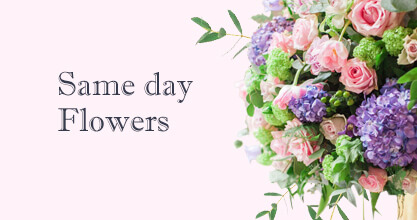
Common problems with wedding flowers in Finchley venues
Posted on 14/10/2026
Wedding flowers can look effortless on the day, but anyone who has planned them knows how much can go wrong behind the scenes. In Finchley venues, the most common problems with wedding flowers usually come down to timing, temperature, access, and the realities of working in a live event space. One minute the bouquets are perfect; the next, a late delivery, a warm room, or a narrow staircase changes everything.
This guide walks through the real issues couples run into, why they happen, and how to avoid them without turning the whole thing into a stress-fest. Whether you are comparing styles, planning a tight schedule, or trying to make sure your arrangements survive a long wedding day, you will find practical help here. And yes, a few small details really can save the day.
Table of Contents
- Why Common problems with wedding flowers in Finchley venues Matters
- How Common problems with wedding flowers in Finchley venues Works
- Key Benefits and Practical Advantages
- Who This Is For and When It Makes Sense
- Step-by-Step Guidance
- Expert Tips for Better Results
- Common Mistakes to Avoid
- Tools, Resources and Recommendations
- Law, Compliance, Standards, or Best Practice
- Options, Methods, or Comparison Table
- Case Study or Real-World Example
- Practical Checklist
- Conclusion
- Frequently Asked Questions
Why Common problems with wedding flowers in Finchley venues Matters
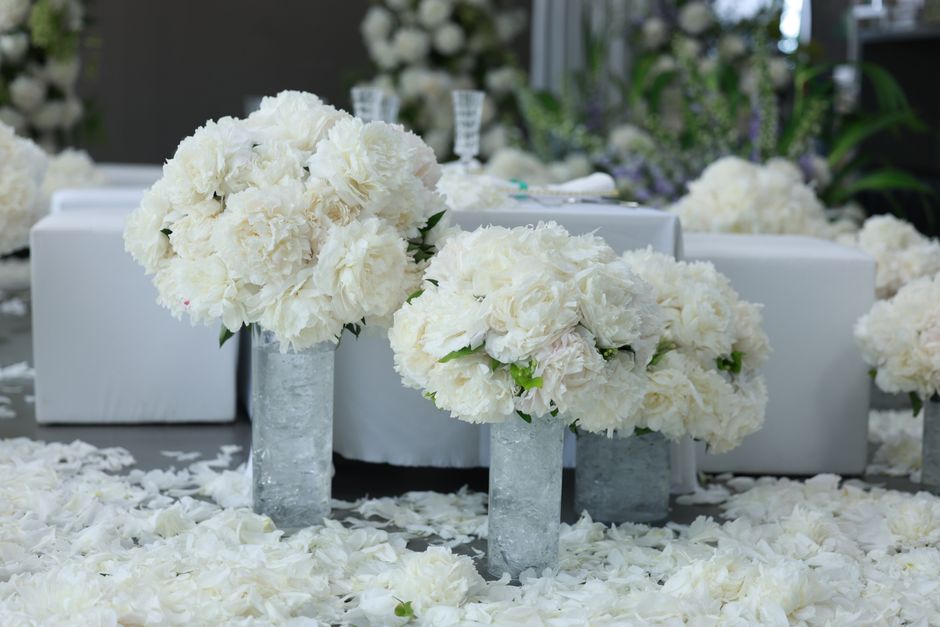
Wedding flowers do more than look pretty in photographs. They shape the mood when guests walk in, set the colour story, and help tie the ceremony and reception together. In Finchley venues, that matters even more because spaces vary a lot. You might be dealing with a cosy function room, a period building, a restaurant setup, or a modern event space with limited access and strict timings.
When flower plans go wrong, the results are usually obvious. A bouquet wilts before the first photos. A table arrangement blocks sightlines. A ceremony arch arrives too late to be installed. These are not dramatic failures, but they can chip away at the calm feel couples work so hard to create. Truth be told, flowers are often one of the most visible parts of the whole day, so any issue stands out straight away.
There is also a practical side. Fresh flowers are living materials, and venues are not always ideal environments for them. Warm lighting, crowded rooms, delayed supplier access, and limited storage can all shorten vase life or make arrangements harder to set up properly. If you understand the common pitfalls early, you can plan around them instead of patching things up at the last minute.
Expert summary: Most floral problems in Finchley venues are not about the flowers themselves. They are about logistics, space, timing, and communication. Fix those four things and the day tends to run far more smoothly.
How Common problems with wedding flowers in Finchley venues Works
To understand the problems, it helps to understand how wedding flowers move through the day. There is the design stage, the ordering stage, delivery, conditioning, installation, and then the live event itself. Any weak point in that chain can cause trouble. Wedding floristry is a bit like a relay race, really. Everyone has to hand the baton over cleanly.
In Finchley venues, some challenges appear again and again. Venue access may be restricted to a narrow loading bay or a time window that is shorter than expected. A florist may need to carry arrangements up stairs, through shared entrances, or across a busy room while guests are already arriving. Even simple things like where the water buckets go can make a difference.
Different flower types also behave differently. Roses and lisianthus may cope better than more delicate blooms in warm conditions. Hydrangeas can be beautiful, but they are famously thirsty and can droop if the room is hot or the stems are not handled carefully. If your reception starts in the afternoon and continues into the evening, the flowers need to hold up for hours under changing conditions. That is where planning matters.
Another part of the process is coordination with the venue itself. A florist needs to know when they can access the room, where they can park, whether candles or open flames are allowed, whether floral foam is permitted, and how the tables will actually be laid out on the day. Small details. Big consequences.
If you want a starting point for the kind of styles and structures that work well, it can help to browse a dedicated wedding collection and compare bouquet, centrepiece, and buttonhole options side by side.
Key Benefits and Practical Advantages
Solving floral issues before the wedding day is not just about avoiding embarrassment. It has some very real benefits.
- Better presentation: Flowers look fresher, fuller, and more intentional when they are designed with the venue in mind.
- Less stress: Clear delivery times and installation plans mean fewer panicked phone calls on the morning.
- Stronger photos: A well-placed bouquet or centrepiece gives the photographer cleaner, more balanced frames.
- Fewer budget surprises: Planning for access, size, and setup needs helps avoid emergency extras.
- Longer-lasting arrangements: The right stems and conditioning keep arrangements looking good from ceremony to last dance.
There is also a less obvious benefit: confidence. Once you know the flowers fit the space and the schedule, everything else feels easier to manage. Couples often tell themselves they will "sort the flowers later," but later is exactly where problems creep in. A bit of structure now saves a lot of fiddling on the day.
For example, if your reception tables are quite close together, choosing compact designs rather than wide, sprawling arrangements keeps conversations flowing. Guests can actually see each other. Funny how that matters at a wedding, isn't it?
And if your theme leans towards soft colour palettes, you may find that a carefully chosen option from the white wedding collection or a balanced design from the broader wedding collection range creates a cleaner finish than trying to force too many shades into one room.
Who This Is For and When It Makes Sense
This topic matters most if you are planning a Finchley wedding in any venue where logistics are not completely straightforward. That includes small hotels, shared-use event spaces, restaurants, community halls, and older buildings with awkward access. It also matters if you are organising the wedding yourself, because DIY florals tend to work best when the plan is tight and realistic.
You may need this guidance if:
- your venue has a narrow setup window
- you are worried about flowers lasting through a long day
- you want the flowers to match a specific decor style
- you are trying to keep costs under control without making the flowers look sparse
- you need bouquets, buttonholes, bridesmaid flowers, and table pieces to feel coordinated
It also makes sense for couples who want practical reassurance. There is a world of difference between picking flowers online and making sure those flowers fit the venue, the guest count, and the day's timings. You do not need to become a florist overnight. You just need the right questions and a realistic plan.
Sometimes the people most affected are not the couple at all, but the person trying to coordinate everything else: a parent, a planner, or a trusted friend with three notebooks and one slightly frazzled expression. We've all seen that scene.
Step-by-Step Guidance
If you want to avoid the common problems with wedding flowers in Finchley venues, follow a process rather than picking arrangements in a rush. Here is the simplest workable version.
- Check the venue layout early. Ask where the ceremony, dining area, gift table, and photo spots will be.
- Confirm access details. Find out when suppliers can arrive, where they can park, and whether lifts are available.
- Match flowers to the room. High ceilings, low light, strong air conditioning, or bright windows all affect flower choice.
- Choose the right scale. Large displays work in spacious rooms; compact designs suit smaller tables and tighter layouts.
- Prioritise durable blooms where needed. If the day is long or warm, ask for flowers that hold up well outside ideal conditions.
- Decide what absolutely matters. Bridal bouquet, ceremony flowers, and table centrepieces are usually the key pieces. Extras can come later if the budget allows.
- Build in a backup plan. A sensible florist can suggest substitutions if a stem is unavailable or seasonal supply is limited.
A realistic example: if your ceremony starts in the late afternoon, your reception runs into the evening, and your venue gets warm once guests arrive, you may want flowers that are more robust than highly delicate varieties. That way, the bouquet still looks fresh in photos after dinner, not tired and peaky.
It also helps to think about the journey of each arrangement. Will it be moved from one room to another? Will it need re-setting before the meal? Will buttonholes be pinned on site? The more movement involved, the more important it is to keep the design practical.
For many couples, the easiest route is to choose coordinated pieces such as bridal bouquets, bridesmaid bouquets, buttonholes, and table arrangements from the same floral family. That keeps the look consistent without making every item identical. A small but useful distinction.
Expert Tips for Better Results
Here is where a few small decisions make a surprisingly big difference.
- Use flowers with a clear purpose. Not every stem needs to be a star. Some flowers carry the design; others fill space and support shape.
- Think about sightlines. Tall centrepieces can look dramatic, but they can also block conversation. Guests do like to see each other, after all.
- Keep the bouquet comfortable. A beautiful bouquet that is too heavy becomes awkward very quickly, especially during a long photo session.
- Ask about conditioning time. Fresh flowers generally benefit from careful preparation before the event, especially if they are travelling in warm weather.
- Use colour strategically. White and green can soften a room, while deeper colours can anchor a brighter space or add contrast to pale interiors.
One small but useful trick is to choose a focal arrangement and let the rest of the flowers support it. In other words, do not try to make every piece compete. That's how designs start looking busy, and busy is rarely the goal at a wedding.
If you are unsure where to start, a curated bridal design such as an elegant bridal bouquet can help set the tone for the rest of the flowers. From there, matching styles can be selected for the bridal party and tables.
Another tip that is often overlooked: confirm whether the venue uses strong heating or cooling at certain times of day. A room that feels fine when empty can be quite different once people are inside, especially in the middle of summer. You will notice this fast.
Common Mistakes to Avoid
The same mistakes crop up again and again, and most of them are avoidable.
- Ordering flowers without checking venue restrictions. Some venues are stricter than couples expect about candles, water, installation timing, or hanging pieces.
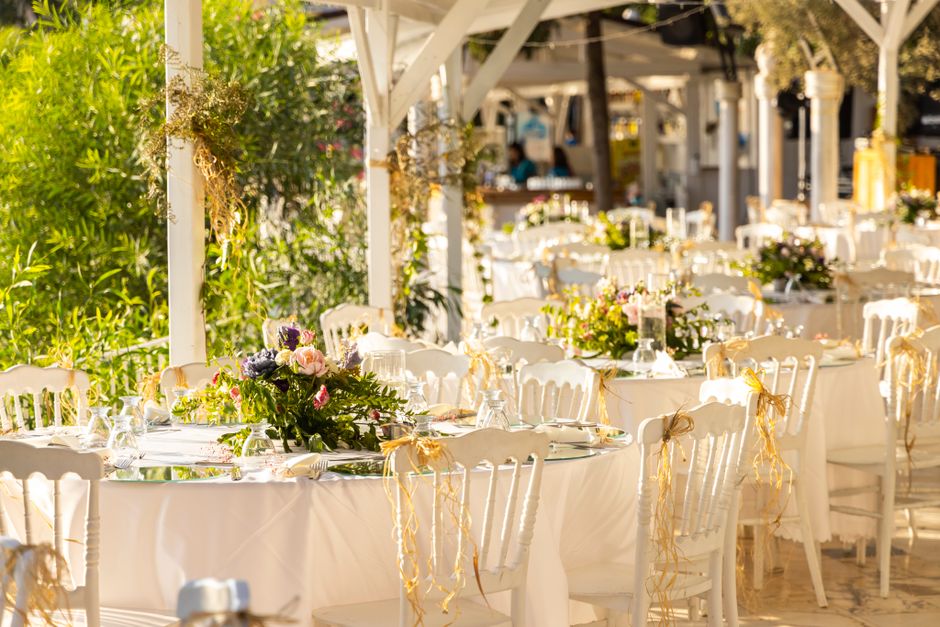
- Choosing arrangements that are too large. Oversized designs can overwhelm smaller Finchley venues and make tables feel cramped.
- Ignoring the delivery window. If flowers arrive too early, they may sit in the wrong conditions. Too late, and the installation becomes rushed.
- Focusing only on the bouquet. The bouquet gets the photos, yes, but the table flowers and buttonholes are what tie the event together.
- Mixing too many styles. A cohesive look usually beats a "bit of everything" approach.
- Choosing delicate flowers for a long hot day. Lovely on paper, less lovely by the pudding course.
Another common issue is not allowing enough time for setup. Florists can do amazing work, but even a beautiful design needs space, access, and a realistic timeline. If the room is still full of moving chairs, bags, or yesterday's furniture when the flowers arrive, things get messy quickly.
And yes, sometimes the mistake is simply assuming someone else has already checked the details. A classic wedding-day assumption. Dangerous little thing.
Tools, Resources and Recommendations
You do not need a complicated toolkit to plan wedding flowers well. A few simple resources are enough to keep things organised.
- Venue floor plan: Helps you decide what size and shape of arrangements will actually fit.
- Guest count: Important for table sizes, number of centrepieces, and how many buttonholes or corsages you may need.
- Colour reference images: Useful when explaining your vision, especially if you like soft neutrals or mixed tones.
- Timeline for the day: Essential for delivery and setup planning.
- Seasonal flexibility: Helps when specific blooms are unavailable or out of season.
For practical planning, it can be useful to review product pages for different flower types and wedding formats. Some couples prefer a ready-made collection, while others like to build a look from individual pieces. A bouquet and matching table flowers from the same family can make the design feel polished without being fussy.
If you are looking for broader inspiration, the best sellers can be a useful starting point, and the luxury flowers range may help if you want a more elevated finish. For a softer romantic feel, some couples also explore styles in the roses category because roses are familiar, versatile, and generally well suited to wedding settings.
There is no magic app that solves every floral issue, by the way. A clear floor plan, honest timing, and a sensible flower choice still beat everything else.
Law, Compliance, Standards, or Best Practice
Wedding flowers are not heavily regulated in the same way as some trades, but there are still sensible standards and venue rules to respect. Best practice matters here because flowers often interact with access routes, food service areas, and fire safety considerations.
In practical terms, that means you should always check the venue's own policies on:
- flammable materials and candles
- water use near electrical items or flooring
- installation times and contractor access
- lifting restrictions and manual handling on site
- any limitations on confetti-style petals or loose floral elements
It is also sensible to think about hygiene and food presentation. Floral arrangements should not interfere with catering surfaces, drink stations, or guest seating. If flowers are near food service areas, clean handling and stable placement are simply part of good practice.
For florists and couples alike, clear communication is the standard that prevents most problems. Confirm the plan in writing where possible, even if it is just a simple message or timeline summary. That way, everyone is working from the same page. No drama, no guessing.
Finally, if you are ordering flowers for delivery around the wedding day, check the florist's policies on substitutions, returns, and delivery expectations. Those practical details matter more than people think, especially if the order needs to be perfect and time-sensitive. A little admin now is worth a lot of calm later.
Options, Methods, or Comparison Table
Couples in Finchley usually choose one of three approaches: fully bespoke floristry, semi-custom wedding packages, or simpler ready-designed pieces. Each has strengths, and each has a few trade-offs.
| Approach | Best for | Pros | Possible downside |
|---|---|---|---|
| Bespoke floristry | Complex themes, statement styling, unusual venues | Highly tailored, flexible, strong visual impact | Needs more planning and usually more budget |
| Semi-custom package | Most weddings with a clear style but practical budget | Balanced, efficient, easier to coordinate | Less room for fully unique details |
| Ready-designed pieces | Simple weddings, fast timelines, smaller events | Quick to choose, straightforward, often easier to manage | Less flexibility for exact venue matching |
If your venue is compact or has strict access, a semi-custom or ready-designed approach can often work better than a sprawling bespoke plan. That said, if the venue is large and you want flowers to carry the atmosphere, bespoke arrangements can be worth the extra coordination. It's a judgement call, not a rule.
For bridal and bridesmaid pieces, coordinated designs such as the SI bridal bouquet and matching bridesmaid bouquet styles can be a neat option when you want consistency without overcomplicating the plan.
Case Study or Real-World Example
Here is a realistic Finchley scenario. A couple is getting married at a venue with one short setup window before guests arrive. The room is attractive but not huge, and tables are fairly close together. They initially wanted large, high centrepieces, a big ceremony arch, and several extra floral displays around the room.
On paper, it looked lovely. In practice, it would have caused three problems: the arrangements would have taken too long to install, the centrepieces would have blocked conversation, and the room would have felt crowded once chairs and catering were in place.
So the plan changed. The florist recommended a more compact bridal bouquet, low table arrangements, and a few carefully placed focal pieces instead of lots of separate displays. The result was calmer, cleaner, and more practical. Guests could talk easily, the photographer had strong floral details to work with, and setup stayed within the available time.
What made the difference? Not a bigger budget. Better fit.
That is often the real lesson with wedding flowers in Finchley venues. The best design is rarely the most elaborate one. It is the one that suits the room, the timing, and the people using it. Slightly less dramatic, maybe. Far better in the end.
Practical Checklist
Use this checklist before finalising your wedding flowers:
- Have you confirmed the venue access time for suppliers?
- Do you know where flowers will be delivered and stored on arrival?
- Have you measured or reviewed the table sizes and room layout?
- Are your chosen flowers suitable for the likely temperature and timing?
- Have you decided which items are essential and which are optional?
- Do the bouquet, buttonholes, and table pieces look cohesive together?
- Have you checked any venue rules on candles, water, or installations?
- Is there a backup plan for substitutions if a bloom is unavailable?
- Have you allowed enough time for setup before guests arrive?
- Have you shared the final plan with the venue and florist clearly?
If you can answer yes to most of those, you are in good shape. Not perfect, maybe, but comfortably on the right track. And that is usually enough for a wedding day to feel smooth and beautifully put together.
One more small tip: keep your flower notes in one place. A phone screenshot, email thread, or printed summary can save a lot of back-and-forth when everyone is busy.
Get a free quote today and see how much you can save.
Conclusion
The common problems with wedding flowers in Finchley venues are usually not mysterious. They come from real-world pressures: access, timing, room size, temperature, and unclear planning. Once you understand those pressure points, flower decisions become much easier. You stop guessing and start choosing with purpose.
The best approach is simple: match the flowers to the venue, keep the design realistic, and make sure everyone involved knows the plan. That one habit alone prevents a surprising amount of stress. In the end, the flowers should feel like part of the celebration, not another thing you have to wrestle with on the day.
And when it all comes together, it really does make a difference. The room feels warmer, the photos look richer, and the day has that quiet sense of being well looked after. That's the bit people remember.
Frequently Asked Questions
What are the most common problems with wedding flowers in Finchley venues?
The most common issues are late delivery, limited access for setup, flowers wilting in warm rooms, arrangements being too large for the space, and poor coordination with the venue's timetable.
How far in advance should I plan wedding flowers for a Finchley venue?
It is best to start planning early enough to confirm venue access, styling, and the key flower types you want. Earlier planning also gives you more flexibility if a seasonal bloom is unavailable.
Do small Finchley venues need different flower arrangements?
Yes. Smaller venues usually work better with compact arrangements, lower table designs, and bouquets that feel elegant without overwhelming the room.
Which flowers last best through a long wedding day?
Hardier stems generally cope better with longer timelines and warmer rooms. Your florist can advise on suitable options based on the season and the style you want.
Can I use large centrepieces in a Finchley venue?
You can, but only if the room size, table spacing, and guest sightlines allow it. In tighter venues, large centrepieces can make the space feel crowded very quickly.
How do I stop wedding flowers from drooping during the reception?
Choose appropriate flower types, keep them hydrated before the event, and make sure delivery and setup timings are planned properly. Warm rooms and direct sunlight can shorten vase life.
Should I match bridesmaid bouquets and buttonholes to the bridal bouquet?
A coordinated look usually works well, but it does not have to be identical. Matching the style, colour palette, or flower family is often enough to make the whole event feel cohesive.
What should I ask my Finchley venue before ordering flowers?
Ask about access times, parking, loading points, room layout, restrictions on candles or installations, and where flowers can be stored before the ceremony. Those details prevent a lot of last-minute issues.
Are wedding flower packages better than bespoke arrangements?
It depends on your priorities. Packages are often easier to manage and suit straightforward weddings, while bespoke floristry is better if your venue or style needs something more tailored.
What is the biggest mistake couples make with wedding flowers?
Probably underestimating logistics. Beautiful flowers still need a realistic plan for timing, space, and delivery. If those are ignored, even a lovely design can run into trouble.
Can I reuse ceremony flowers at the reception?
Yes, in many cases that is a smart way to stretch the budget. It works best when the arrangements are easy to move and the timeline allows for re-setting them without chaos.
Where can I find wedding flower options suited to Finchley weddings?
You can look at wedding-focused collections and individual bouquet or centrepiece styles that suit your venue size, colour scheme, and schedule. The right choice is the one that fits the day, not just the pictures.